Woogaroo Creek – Bank Stabilisation
This project commenced in 2020. It a joint venture with the Ipswich Rivers Improvement Trust (the Trust), the Ipswich City Council (the Council) and the Port of Brisbane (PoB). The Trust and the Council funded the designs, and the Council and the PoB funded of the construction of the project as part of their Offsite Stormwater Treatment Projects. This project helped to reduce the amount of sediment entering the catchment by rehabilitating the degraded banks.
The rehabilitation technique used combined the use of large root balls on the toe of the bank, to collect sediment and improve aquatic habitat, and pile fields and dense revegetation on the bank. The bank was re-profiled, and pile fields were used to stabilise the bank, collect sediment and slow the flow of water. A critical component to this project was the establishment of vegetation on the battered bank. To take over the role of timber poles into the future. As the poles degrade, the vegetation will grow and protect the bank.
Woogaroo Creek is a dynamic waterway that is regularly subjected to flooding. It was estimated that the project achieved a 167400 kg annual reduction of Total Suspended Solids. The site is in the lower reaches of the system where increased flows from development have lowered the creek bed, disconnecting the creek from the surrounding floodplain and further increasing the flow volume in the creek.
The site has held up very well during over the past few years. The continued flooding in the catchment has reduced the quality and quantity of the vegetation at the site. However, the design has continued to stand. Additional resources will be allocated to this site to improve the vegetation.
The Ipswich Rivers Improvement Trust and the Ipswich Council continue to work together to protect, and restore, the banks of the Woogaroo Creek.
The IRIT will continue to work with the Council and other funding partners to repair the banks of the erosive Woogaroo Creek.
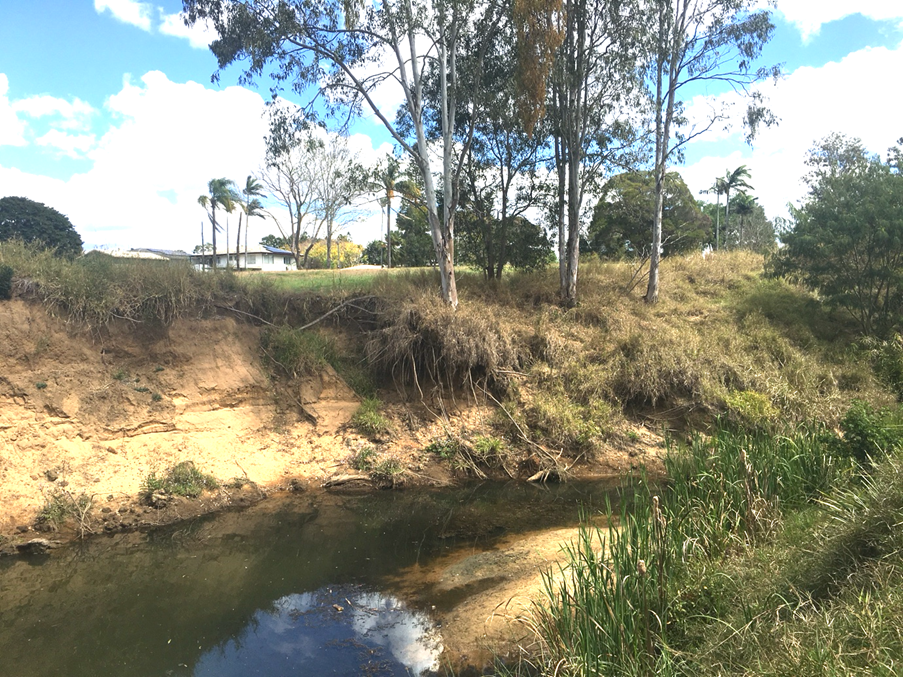
September 2020 – The site on Woogaroo Creek when the joint project began. Note the risk to the Eucalyptus in the foreground. Looking downstream.
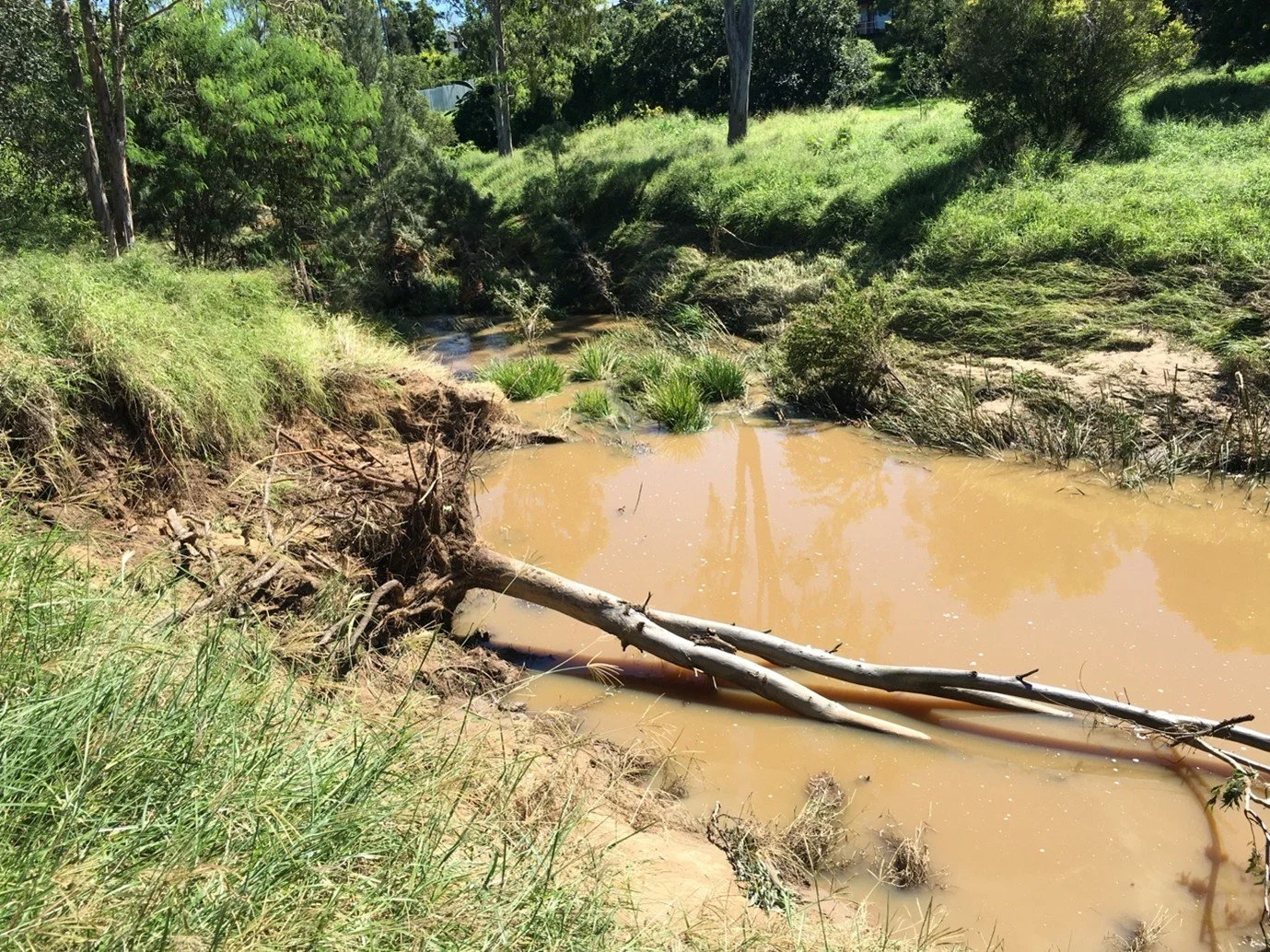
March 2021, post summer rains – The erosion has caused the tree to fall into creek. Looking downstream.
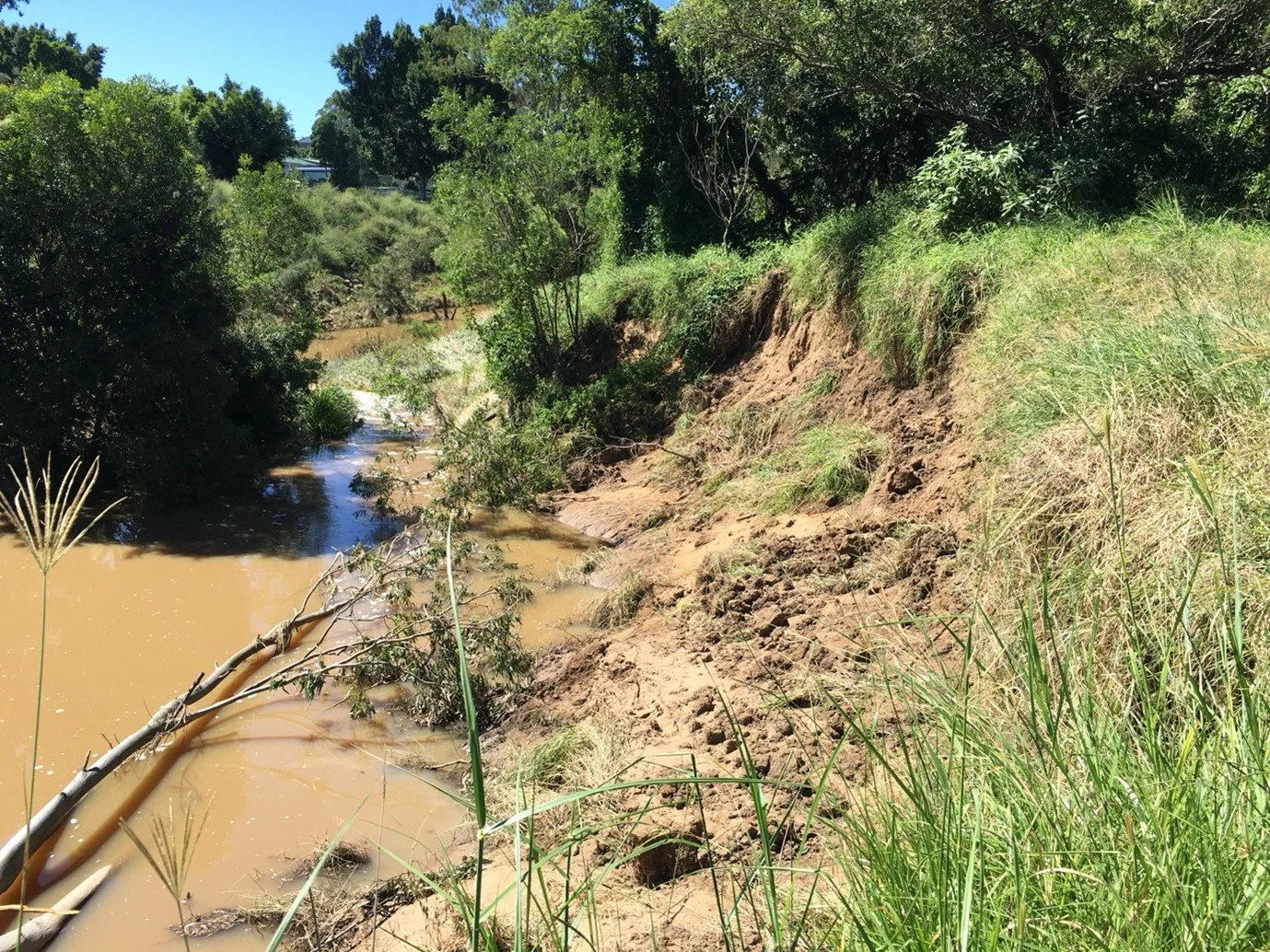
March 2021 – Looking up stream at the newly eroded bank and the tree that has fallen into the creek. The bank has slumped and continued to erode with the summer rains.
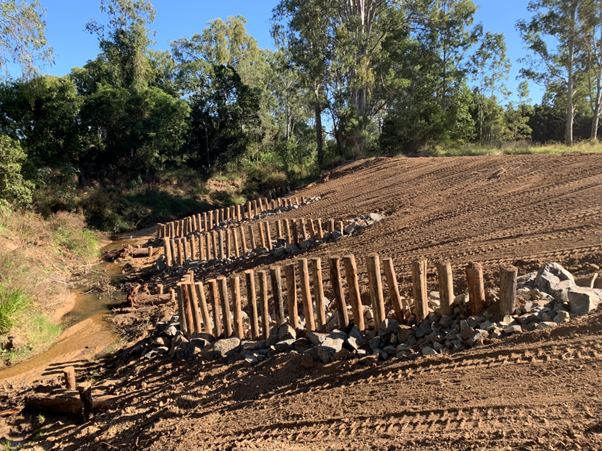
September 2023 – The site post construction with the re-profiled bank, pile fields secured with rock and root balls on the bank. Looking up stream.
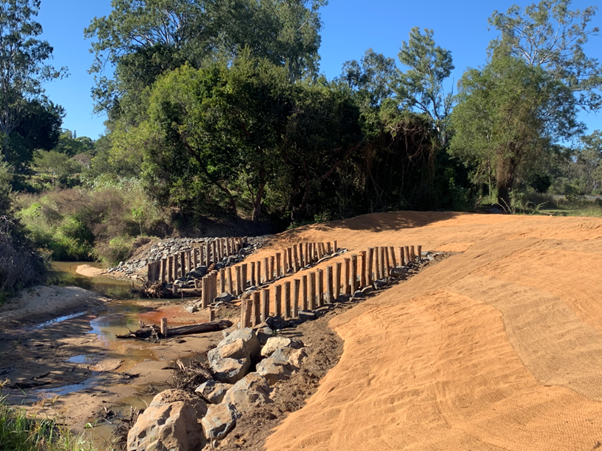
September 2023 – The site after the installation of jute matting. Looking upstream.
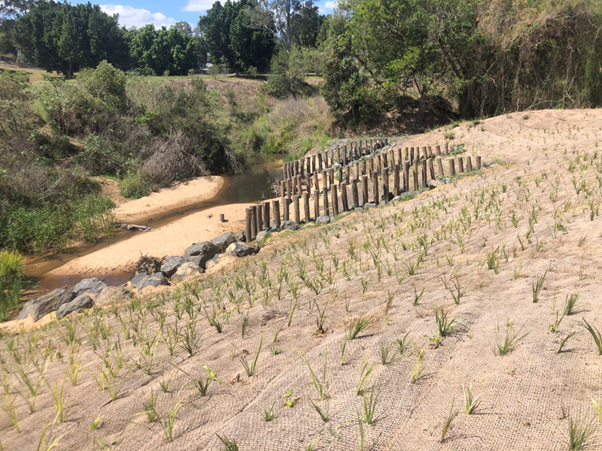
September 2023 – The vegetation has been freshly installed at the site. Sediment has already been collected on the toe of the bank. Looking upstream.
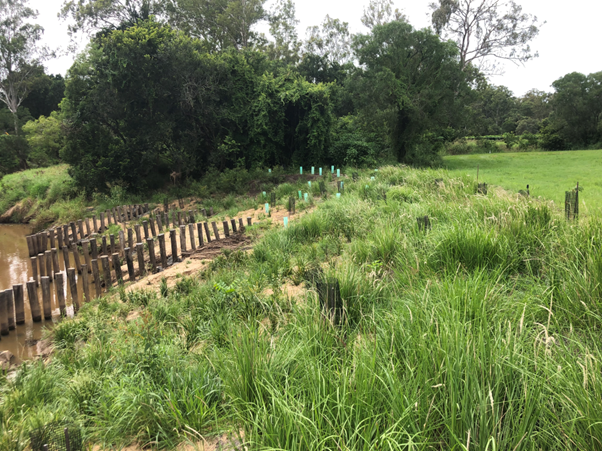
February 2024 – Additional sediment has been deposited during the summer floods. The vegetation is establishing but will need some assistance to achieve the required density.
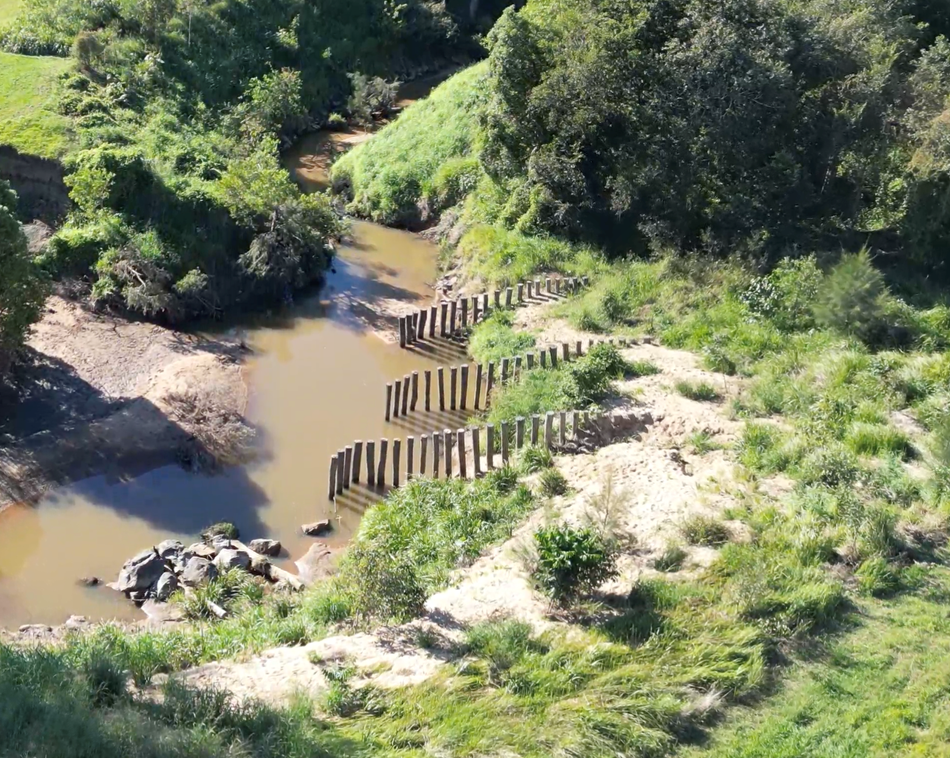
May 2025 – Multiple floods over the wet season has seen a new layer of sediment deposited along with some loss of vegetation. There is another area of erosion developing on the opposite side of the bank.